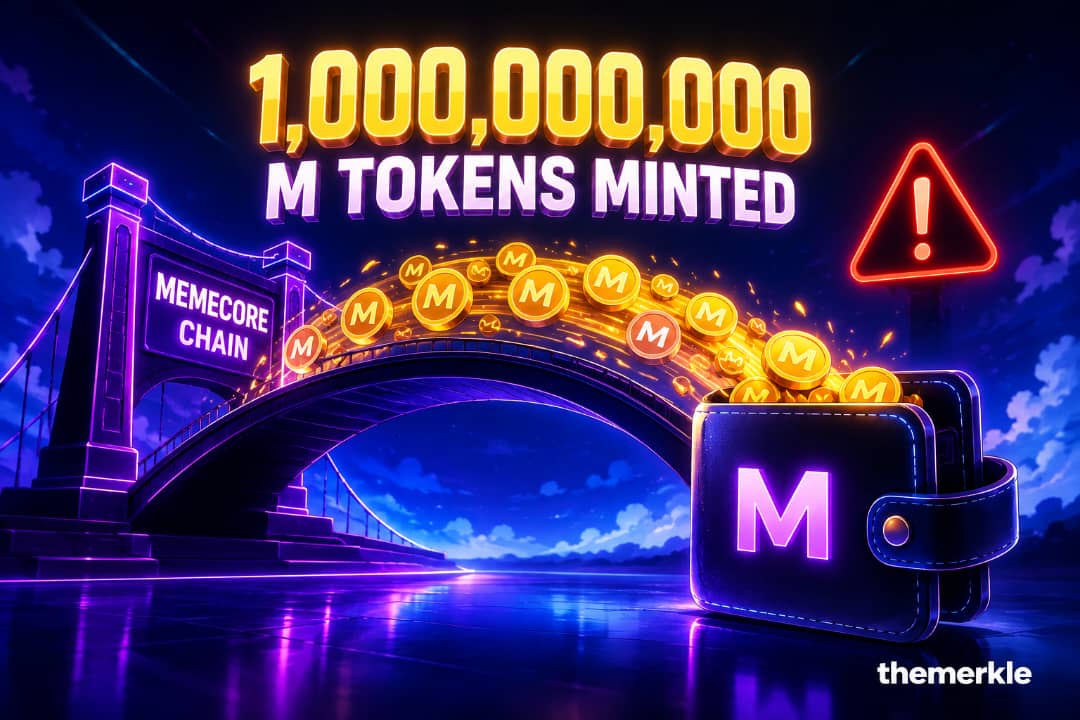
Memecore's M token saw roughly a billion dollars materialize out of nowhere this week through the project's own cross-chain bridge, landing in a single wallet nobody had ever seen before with a specific kind of silence that says more than any denial ever could.
No hack has been claimed. No exploit has been disclosed. And when the project finally posted something, it wasn't an explanation, it was a teaser.
The Minting Event, According To Peckshield
Blockchain security firm PeckShield flagged the activity directly, and the mechanics they laid out are genuinely stark. Two batches of roughly 463 million M tokens each, about 1 billion combined, were minted from wallets 0xfdea...447a7BF and 0x4388...C919dd7, then consolidated into a single fresh address, 0x69cB...F6FF4681, now holding roughly $1 million in value.
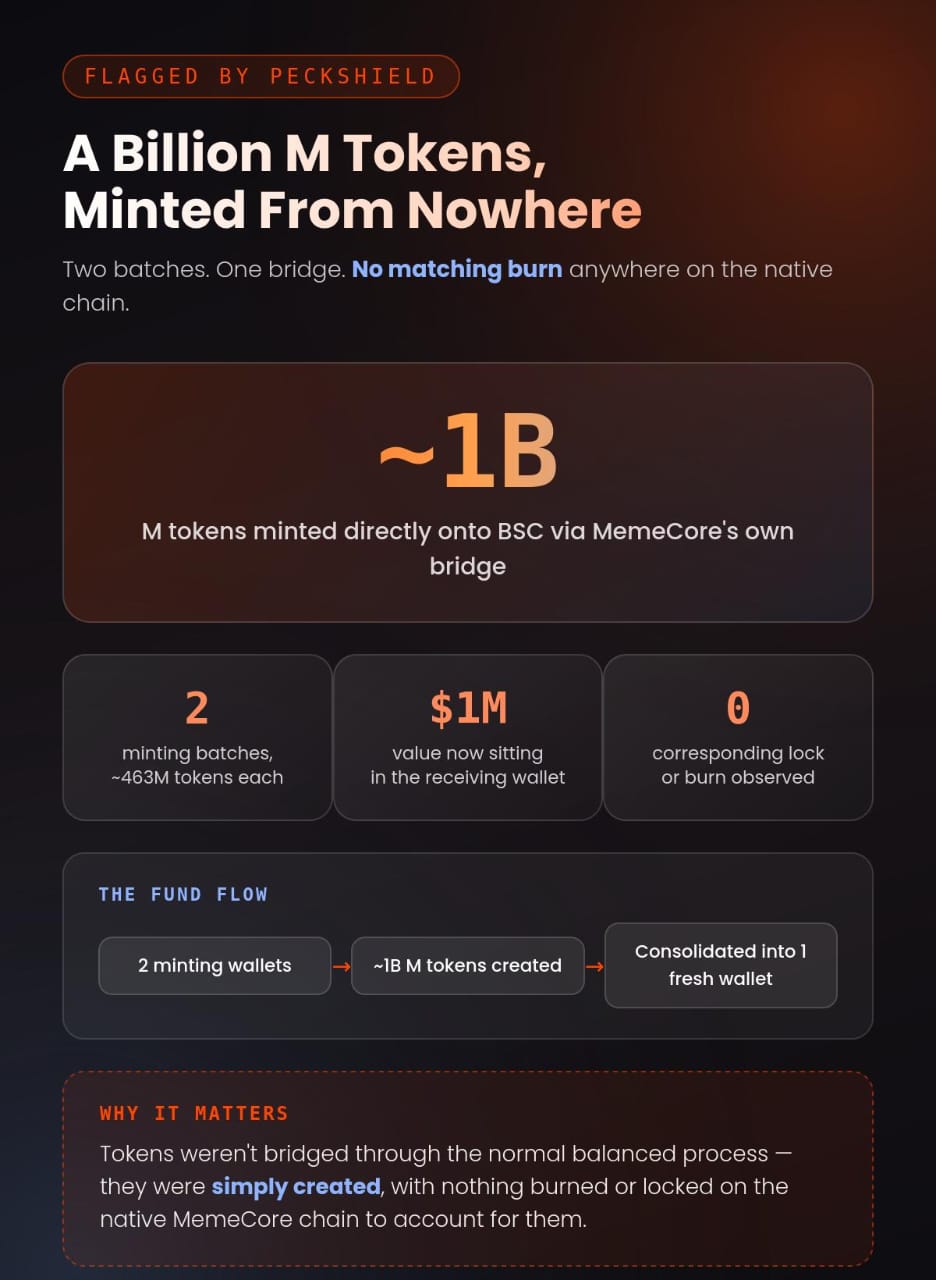
I think the mechanism here matters as much as the amount. This wasn't tokens quietly appearing through some obscure exploit, it happened through MemeCore's own cross-chain bridge, minting the tokens directly onto BSC. PeckShield noted that no corresponding lock or burn has been observed on the native MemeCore chain, meaning the tokens weren't moved from one chain to another through the normal, balanced bridging process, they were simply created. That absence of a matching burn is the detail that turns this from an unusual transaction into something that genuinely needs an explanation.
Why This Doesn't Look Like An Outside Attack
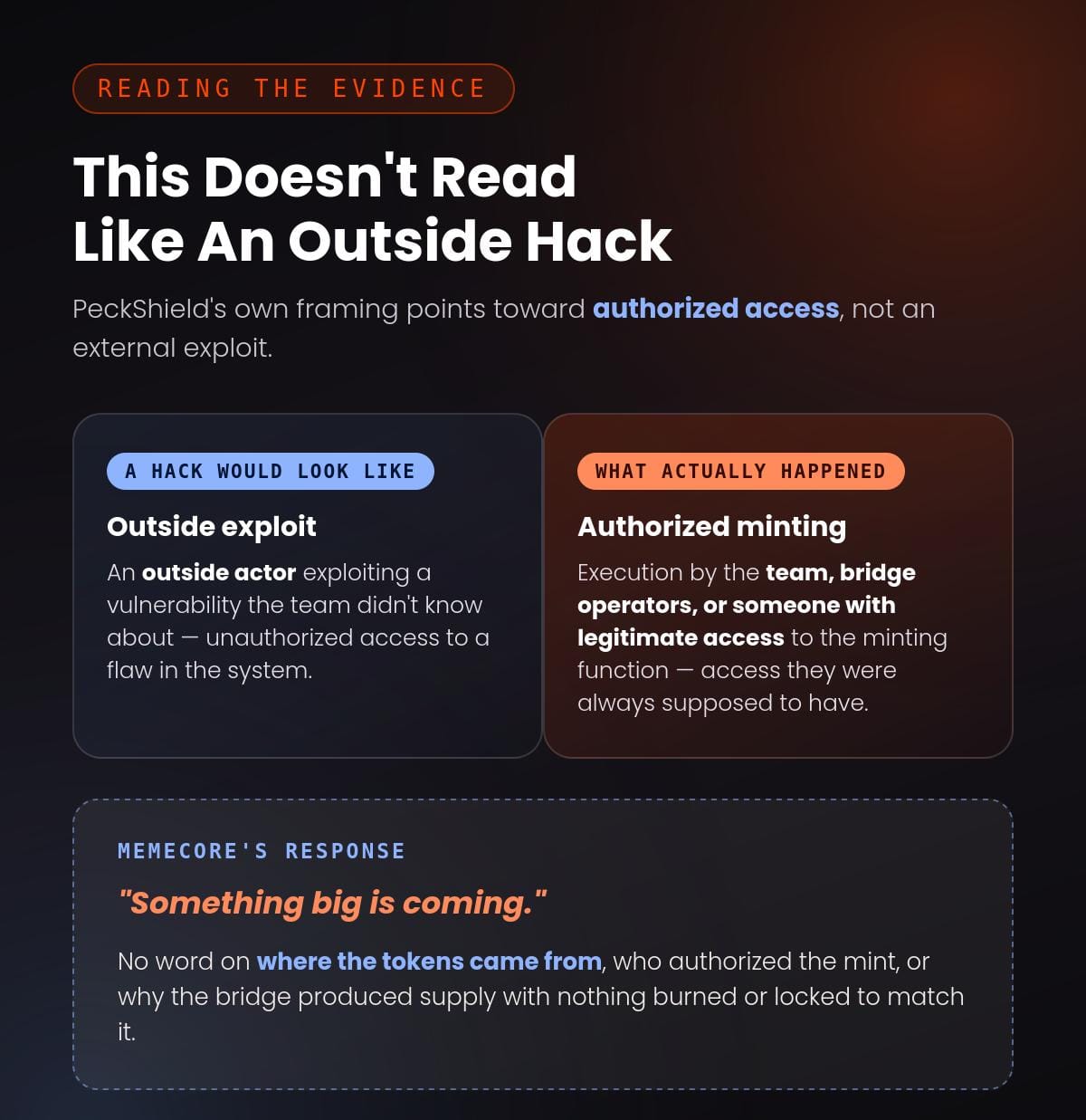
PeckShield was direct about what this pattern actually suggests. Rather than reading as a hack, the evidence points toward execution by the team itself, the bridge operators, or someone else with legitimately authorized access to the minting function. I think that distinction is genuinely important, and worth sitting with rather than glossing over. A hack implies an outside actor exploiting a vulnerability the team didn't know about. What's being described here is closer to an authorized party using access they were always supposed to have, in a way that produced a billion tokens with no corresponding burn anywhere in the system. Those are two very different stories, and only one of them leaves the project's own leadership with real questions to answer.
This Isn't Memecore's First Brush With Insider Scrutiny
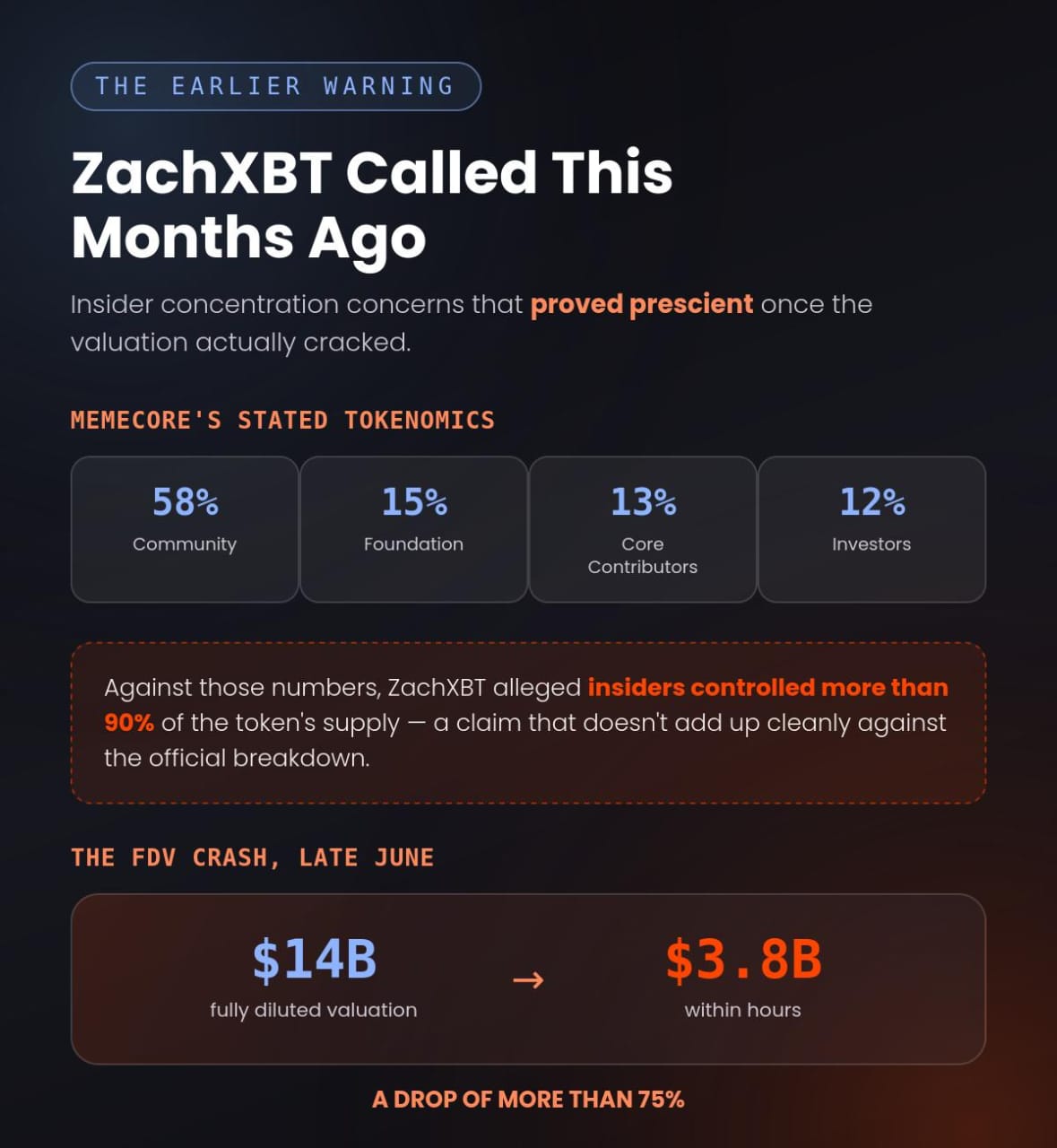
I don't think this incident can be read in isolation, and PeckShield made that connection explicit themselves. This development sits uncomfortably close to concerns ZachXBT raised months earlier, when he publicly challenged MemeCore to justify its multi-billion dollar valuation, alleging that insiders controlled more than 90% of the token's supply.
That earlier scrutiny wasn't a passing comment either. ZachXBT's questions came just days after RaveDAO's token collapsed more than 90% in what he described as a suspected pump-and-dump, and he pointed to MemeCore as showing the same warning signs, a thin circulating float propping up an enormous fully diluted valuation, with the project's stated tokenomics, 58% community, 15% foundation, 13% core contributors, 12% investors, notably not adding up cleanly against his 90% insider concentration claim. By late June, those concerns proved prescient in a genuinely painful way: M's fully diluted valuation crashed from roughly $14 billion to $3.8 billion within hours, a drop of more than 75%, with ZachXBT again pressing exchanges like Binance and Bybit to explain how a token with this little verifiable liquidity had been listed at multi-billion-dollar valuations in the first place.
The Team's Response Was A Teaser, Not An Explanation
Faced with a billion freshly minted tokens and a documented history of insider concentration concerns, MemeCore's official account posted something that reads, charitably, as tone-deaf: something big is coming.
I think it's genuinely hard to overstate how poorly that lands given the specific accusation on the table. Nobody flagging a billion-token minting event with no corresponding burn is asking for a teaser about upcoming announcements. They're asking where the tokens came from, who authorized the mint, and why the project's own bridge produced supply that doesn't reconcile with anything burned or locked on the native chain. Responding to that with marketing copy, whether intentional or simply poorly timed, does very little to address the actual question sitting in front of the project right now.
What This Means For Anyone Holding Or Watching M
I think the honest read here is that this incident, on its own, is already serious enough to warrant a direct technical explanation from MemeCore, and the fact that it's landing on top of months of unresolved insider concentration questions makes the silence considerably harder to excuse. A billion tokens minted through a project's own bridge, with no matching burn anywhere in the system, isn't the kind of anomaly that resolves itself through a vague social media post about future announcements.
For anyone holding M or watching this unfold, I'd treat PeckShield's on-chain findings as the most reliable information available right now, precisely because they're independently verifiable against the blockchain itself, rather than dependent on what MemeCore chooses to say or not say. Until the project addresses where those tokens actually originated and who had the access to mint them, this sits as an open, unexplained event layered directly on top of a token that's already spent months under scrutiny for exactly this kind of supply and transparency question. Given MemeCore's track record with ZachXBT's previous findings turning out to be directionally accurate once the RaveDAO-style crash actually arrived, I don't think "wait and see" is a particularly comfortable position for anyone still holding the token right now.
Disclosure: This is not trading or investment advice. Always do your research before buying any cryptocurrency or investing in any services.
Follow us on Twitter @themerklehash to stay updated with the latest Crypto, NFT, AI, Cybersecurity, and Metaverse news!