

Since the jump online, financial institutions and their patrons have been victims of cybercriminals. In fact, financial organizations and all types of businesses can be susceptible to fraud. Fraud can take many different forms, but it can be split into three main types: misappropriation of assets, bribery, and false statements on financial statements.
Although this is the least expensive type of fraud researched, asset misappropriation makes up a majority of cases.
These are plans whereby an employed person steals from or takes advantage of their company.
Financial embezzlement counts among the smaller percentage of cases, but it costs the most on average.
These plans involve leaving out or lying about the information contained in a company's financial report.
Corruption is in the middle, and such schemes occur when staff members use their power in business dealings to help themselves instead of their employers, which is against their duty. Extortion, bribery, and contradiction are all kinds of corruption.
Any organization, big or small, needs to make sure that it has a plan to prevent fraud. By putting in place different procedures and controls, you can reduce the amount of fraud.
 Source[/caption]
Several of the employees who work in your corporation, such as Certified Fraud Examiners (CFE), CPAs who are Certified in Fraud Forensics (CFF), and Certified Public Accountants (CPAs), can play a significant role in setting up fraud prevention rules and processes.
But not many of such specialists have the right kind of expertise or track record to provide the service for your requirements.
It is essential to be careful when employing financial advisers, fraud invigilators, and other experts who would have access to classified company details like banking information.
Ensure that these firms or people have a good reputation for providing exemplary service and being trustworthy.
So, you can be sure that your investigative assessments, essential financial advisory services, and internal control evaluations are thorough and that your data will not ever be leaked.
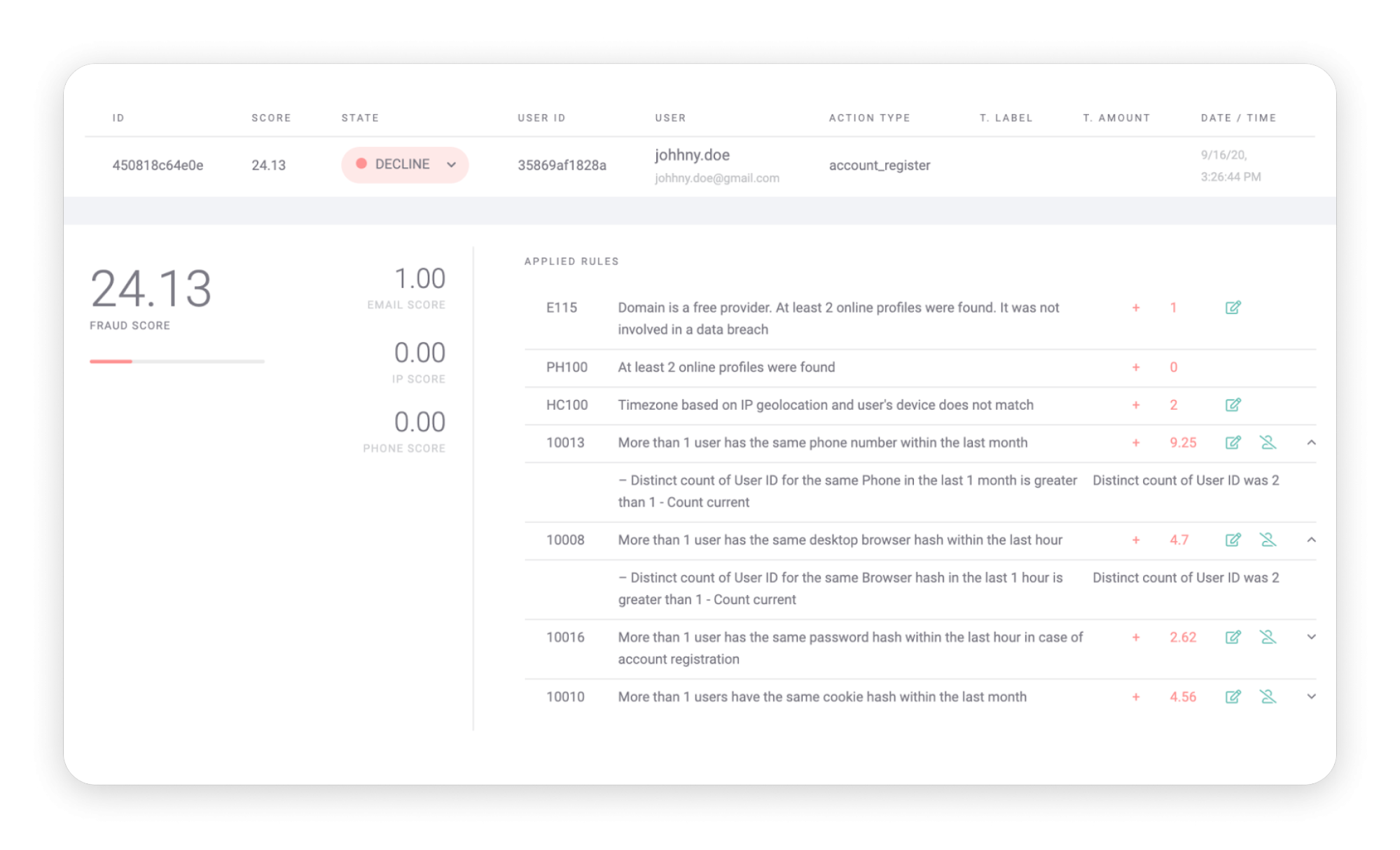
Another way, as per this Guide to Fraud Monitoring, is to deploy fraud monitoring tools – end-to-end software deployed wherever customers interact with your product or service.
They run under the hood 24/7, observing and assessing behavior and analyzing data, focusing on specific touchpoints – such as sign-up and payments.
Source[/caption]
Several of the employees who work in your corporation, such as Certified Fraud Examiners (CFE), CPAs who are Certified in Fraud Forensics (CFF), and Certified Public Accountants (CPAs), can play a significant role in setting up fraud prevention rules and processes.
But not many of such specialists have the right kind of expertise or track record to provide the service for your requirements.
It is essential to be careful when employing financial advisers, fraud invigilators, and other experts who would have access to classified company details like banking information.
Ensure that these firms or people have a good reputation for providing exemplary service and being trustworthy.
So, you can be sure that your investigative assessments, essential financial advisory services, and internal control evaluations are thorough and that your data will not ever be leaked.
Another way, as per this Guide to Fraud Monitoring, is to deploy fraud monitoring tools – end-to-end software deployed wherever customers interact with your product or service.
They run under the hood 24/7, observing and assessing behavior and analyzing data, focusing on specific touchpoints – such as sign-up and payments.
6 Key Measures to Take to Prevent Fraud and Detect Suspicious Activities Before They Occur
Fraud detection is not as difficult as it sounds. By implementing the below strategies, you can ensure that your organization stays secure from fraud and related malpractices.1. Get To Recognize Your Staff
People committing fraud often act in ways that show that they are planning to do so. By paying close attention to staff members, you can determine if there is a risk of fraud. Managers need to understand their workers and be associated with them. Frequently, a shift in how you feel can alert you to threats. It can also show problems on the inside which have to be fixed. For instance, if an employee feels unappreciated by the company owner or angry at their supervisor, it might make the malicious actor perpetrate forgery as a chance to get back at them. Any change in how an employee acts should make you pay particular attention to them. This could cut down on fraud and make the company a stronger, more effective workplace where employees are happier. If you listen to staff members, you might also find other hints. Think about a 30-year worker who now is functioning for 60 hours per week rather than the standard 45 hours since two of their workers were let go. During a conversation with the worker, it comes out that his sibling lost his job, and he and his family have relocated to the individual's house. This may be an indication that there is a chance of theft. Quite often, an executive who does something wrong is the one you least suspect. It's important to talk to your staff members and then understand them.2. Deploy a Reporting System
All people are influenced by awareness. Everybody in your company needs to be mindful of fraud risk policies, explaining the various malpractices and what happens when they happen. People who want to cheat the system will realize that their management is observing, which should stop them. Employees who aren't tempted to steal or defraud also will be told what signs to look out for. Fraud can be stopped with the help of such employees. In fact, most suggestions come from people who work at the company, but clients, contractors, rivals, and people who know the fraudster are also significant sources. Because many workers are afraid to tell their bosses about problems, you might want to establish a way for them to do so anonymously. Employees can use a tip helpline or a website to report fraud without risking their own identities.3. Hire Experts and Tools You Can Trust
[caption id="attachment_73333" align="alignnone" width="1999"] Source[/caption]
Several of the employees who work in your corporation, such as Certified Fraud Examiners (CFE), CPAs who are Certified in Fraud Forensics (CFF), and Certified Public Accountants (CPAs), can play a significant role in setting up fraud prevention rules and processes.
But not many of such specialists have the right kind of expertise or track record to provide the service for your requirements.
It is essential to be careful when employing financial advisers, fraud invigilators, and other experts who would have access to classified company details like banking information.
Ensure that these firms or people have a good reputation for providing exemplary service and being trustworthy.
So, you can be sure that your investigative assessments, essential financial advisory services, and internal control evaluations are thorough and that your data will not ever be leaked.
Another way, as per this Guide to Fraud Monitoring, is to deploy fraud monitoring tools – end-to-end software deployed wherever customers interact with your product or service.
They run under the hood 24/7, observing and assessing behavior and analyzing data, focusing on specific touchpoints – such as sign-up and payments.