Six weeks. That's how long it took a retail brokerage app to overtake every established Ethereum Layer 2 in the one metric that actually measures economic weight: fees paid back to Ethereum itself.
Base, Optimism, Arbitrum's own ecosystem chains, all of them now sit behind a network that didn't even exist before July. I've watched a lot of L2 launches come and go without moving this particular needle, and this one genuinely surprised me.
The Numbers That Put Robinhood Chain On Top
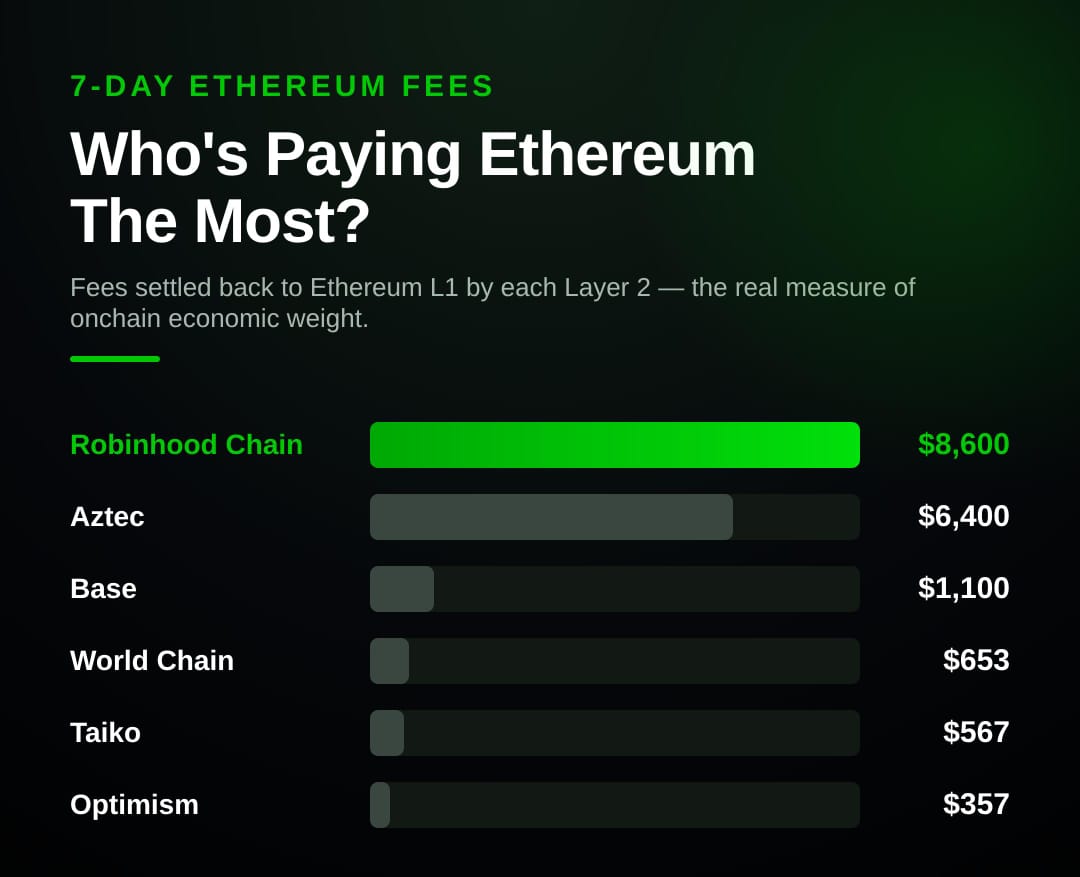
According to data shared by ETH Daily, Robinhood Chain paid $8,600 in fees back to Ethereum over the past seven days, more than any other Layer 2 network tracked. Aztec followed in second at $6,400, with Base a distant third at $1,100, trailed by World Chain at $653, Taiko at $567, X Layer at $459, Lighter at $368, Optimism at $357, Unichain at $329, and Polygon at $251.
I think the gap here is what actually makes this story worth telling. Robinhood Chain's contribution runs nearly eight times higher than Base, which has spent years building out one of Ethereum's largest and most active L2 ecosystems. That's not a marginal lead, it's a network built six weeks ago outpacing infrastructure that's had years to mature.
Why Fees Paid To Ethereum Actually Matter
Here's the part I think gets glossed over in a lot of L2 coverage: fees paid back to Ethereum aren't a vanity metric, they're a direct measure of how much genuine, settled economic activity a Layer 2 is actually generating. Every L2 built on Ethereum periodically posts transaction data and proofs back to the main chain, and the fees paid for that process scale directly with how much real activity the network is processing. A chain with high internal transaction counts but weak fees paid to Ethereum is often running mostly low-value or subsidized activity. A chain paying substantially more in fees, as Robinhood Chain is doing here, is settling genuinely significant transaction volume and value back to the base layer.
As Ethereum Institute framed it in their own analysis of this shift, this isn't just Robinhood competing for users and revenue among L2s, its growing activity is also translating into more fees flowing back to Ethereum itself, a distinction that matters for anyone tracking Ethereum's own economic health rather than just L2 competition in isolation.
How Robinhood Chain Got Here So Fast
Robinhood Chain isn't a side project, it's the company's most direct bet yet on merging traditional brokerage infrastructure with onchain finance. Robinhood officially launched the network's public mainnet on July 1, 2026, at its "The World is Flat" keynote in London, describing it as a permissionless, AI-native Ethereum Layer 2 built on the Arbitrum stack, purpose-built for tokenized real-world assets, 24/7 settlement, and onchain financial services. You can read the company's full official launch announcement directly here: Robinhood Accelerates Global Expansion with Robinhood Chain Mainnet, Stock Tokens, Agentic Trading and New Suite of DeFi Products.
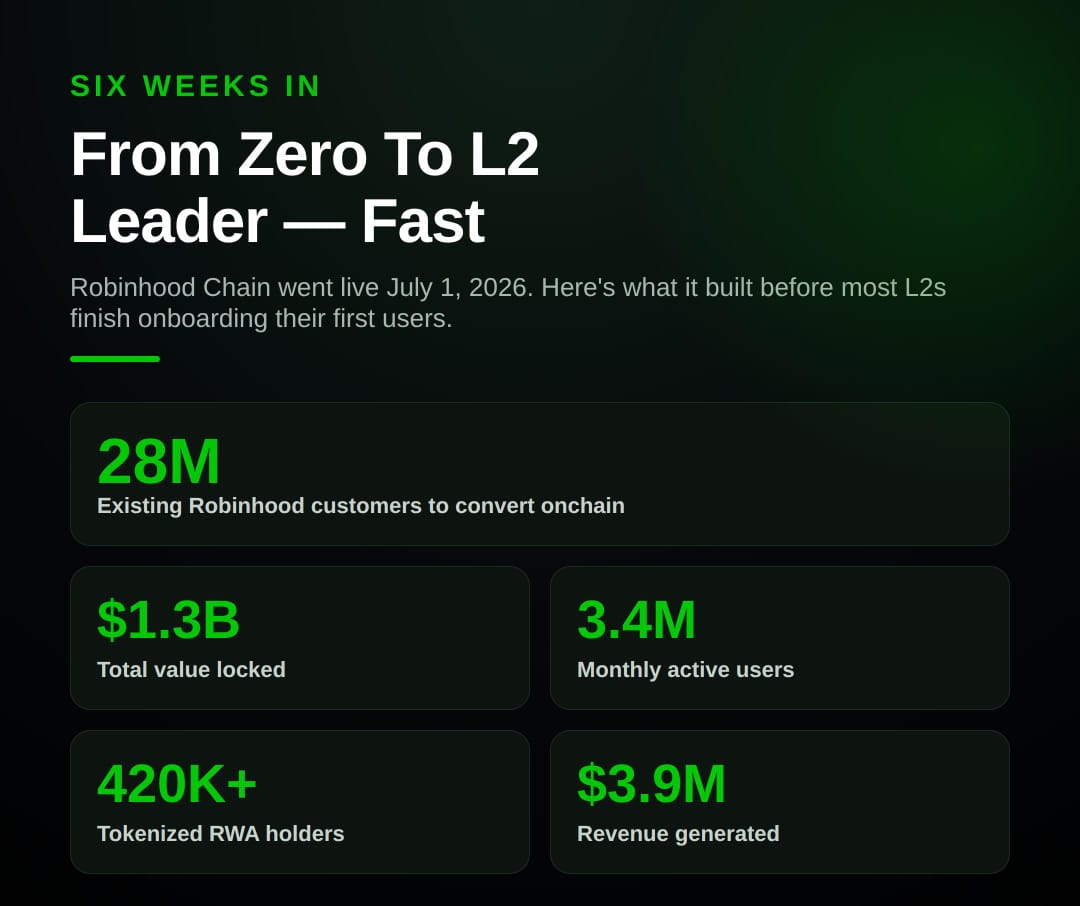
For a company sitting on 28 million existing customers, the launch wasn't starting from zero the way most new L2s do. Robinhood didn't need to bootstrap an audience, it needed to convert an audience it already had, and the six-week numbers suggest that conversion happened remarkably fast: more than 420,000 RWA holders, $1.3 billion in total value locked, 3.4 million monthly active users, $3.9 million in revenue, and a median transaction fee of just $0.00669.
Comparing Robinhood Chain's Approach To Established L2s
This is where I think the comparison against Base, Optimism, and the rest gets genuinely interesting rather than just a leaderboard exercise. Most established L2s built their early growth on token incentive programs, liquidity mining, and airdrop farming, strategies designed to manufacture activity before organic demand caught up. Robinhood Chain doesn't have a native token at all. Its early TVL and transaction growth is instead built almost entirely on tokenized real-world assets, stock tokens for companies like NVIDIA, Google, and Apple, alongside DeFi integrations from established protocols like Uniswap and Morpho that joined as launch partners.
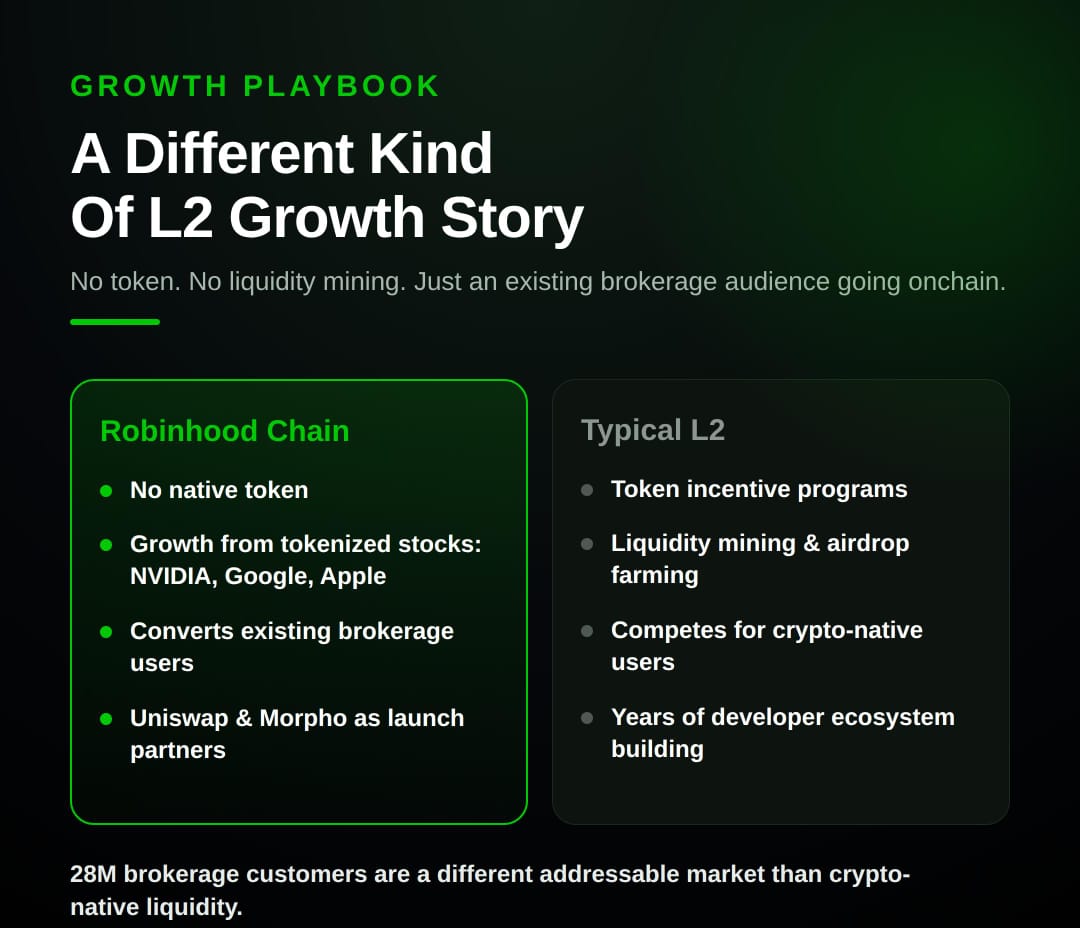
That's a structurally different growth engine than what powers most of the chains sitting below it on the fee leaderboard. Base and Optimism built their dominance through years of developer ecosystem growth and DeFi-native activity. Robinhood Chain is instead directly piping an existing brokerage user base into onchain rails, converting people who were already trading stocks into people now holding tokenized versions of those same stocks, without necessarily needing them to understand or care that they're using a Layer 2 at all.
What This Shift Could Mean For Ethereum's L2 Landscape
I don't think it's an exaggeration to say this represents a genuinely new category of L2 growth story. Most chains competing for L2 dominance have spent years fighting over the same relatively narrow pool of crypto-native users, developers, and liquidity. Robinhood Chain is instead pulling in an entirely separate population, retail brokerage customers who may have never touched DeFi before, and converting a meaningful slice of them into active, fee-generating onchain users within weeks rather than years.
If this trend continues at anything close to its current pace, Robinhood Chain could become one of the most economically significant contributors to Ethereum's base layer activity, not because it out-competed other L2s on crypto-native terms, but because it brought a genuinely new, much larger addressable audience directly onchain. For an ecosystem that's spent years debating how to bring the next wave of mainstream users into Ethereum, watching a brokerage app quietly do it in six weeks, and outpay every established L2 doing so, is the kind of shift worth tracking closely rather than dismissing as a temporary novelty.
Disclosure: This is not trading or investment advice. Always do your research before buying any cryptocurrency or investing in any services.
Follow us on Twitter @themerklehash to stay updated with the latest Crypto, NFT, AI, Cybersecurity, and Metaverse news!