
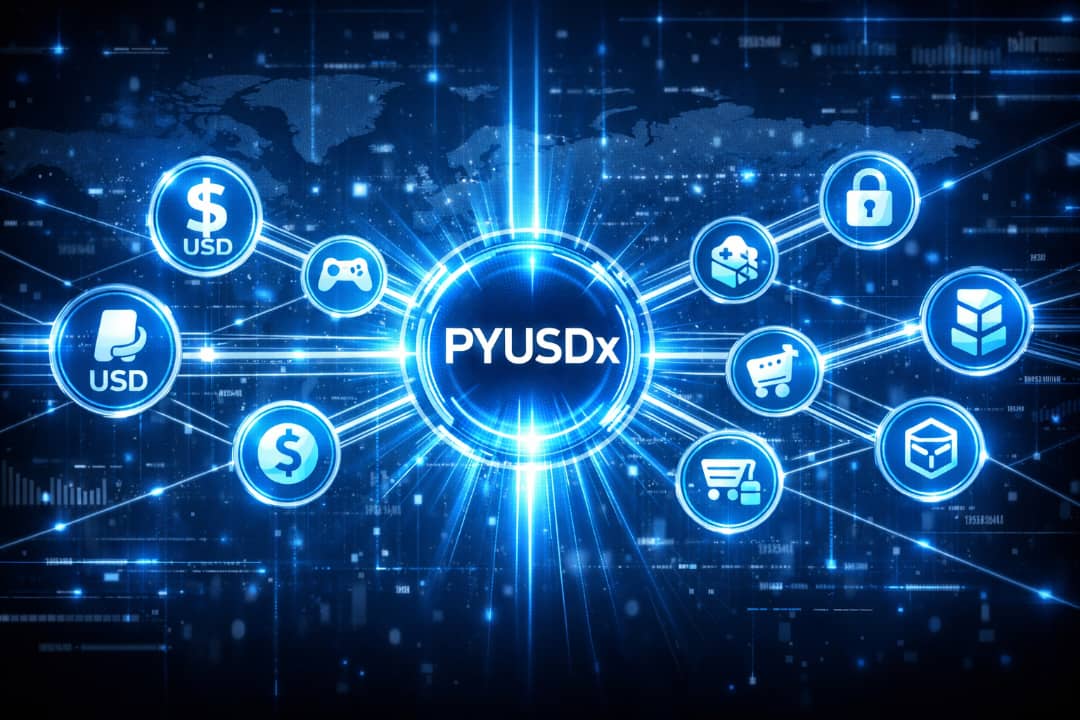
A new collaboration between MoonPay, PayPal, and M0 is aiming to reshape how stablecoins are created and deployed.
The partners have unveiled PYUSDx, a tokenization framework designed to simplify the process of issuing and managing application-specific stablecoins while maintaining backing through PayPal USD.
The announcement signals a growing push toward modular stablecoin infrastructure, tools that allow developers and businesses to launch tailored digital dollars without building complex financial and compliance systems from scratch. By focusing on speed and interoperability, the framework seeks to remove many of the barriers that traditionally slowed stablecoin experimentation.
Introducing PYUSDx.
A new offering from M0, @MoonPay and @PayPal that lets teams launch custom stablecoins backed by PayPal USD. pic.twitter.com/GZSrXNRpi4
— M0 (@m0) February 27, 2026
Backed One To One By Paypal Usd Liquidity
At the core of PYUSDx is its 1:1 backing by PayPal USD, ensuring that any stablecoins issued through the framework maintain parity with the underlying asset. This design positions PYUSDx as a liquidity extension rather than a separate stablecoin, enabling projects to tap directly into an existing pool of on-chain value.
By leveraging PayPal USD’s liquidity base, the framework aims to offer immediate market depth for new tokens, reducing the challenges often faced by newly launched stablecoins that struggle to bootstrap adoption. The structure also reinforces confidence by tying new issuances to a well-recognized digital dollar brand.
The initiative reflects a broader industry trend in which stablecoin providers seek to expand utility through tokenized variants while preserving the stability of a core reserve asset.
Designed To Accelerate Build To Launch Cycles
One of the primary goals of PYUSDx is to shorten the timeline between concept and deployment. The framework is built to allow teams to move from development to live issuance in a matter of days rather than months, significantly reducing technical and operational overhead.
For builders, this means fewer resources spent on infrastructure such as custody integrations, compliance tooling, and liquidity provisioning. Instead, they can focus on designing use cases, whether for payments, gaming economies, or decentralized finance, while relying on the framework to handle the underlying issuance mechanics.
The speed advantage could prove especially attractive for startups and application developers seeking to experiment with programmable money without committing to full-scale financial engineering from the outset.
Built On M0 Infrastructure And Issued By Moonpay
PYUSDx runs on M0’s stablecoin platform, aligning with the standards used by other M0-powered digital currencies. This ensures compatibility across a broader ecosystem of applications and services already integrated with the platform.
Issuance is handled by MoonPay, whose role includes facilitating distribution and enabling access for developers and partners. By combining M0’s infrastructure with MoonPay’s payments and on-ramp capabilities, the framework creates a bridge between technical tokenization tools and real-world distribution channels.
The collaboration highlights how stablecoin innovation is increasingly driven by partnerships that blend financial infrastructure, developer platforms, and global payment networks.
Additional context from MoonPay’s announcement is available here:
Introducing PYUSDx, a stablecoin tokenization framework from PayPal, @M0, and MoonPay.
🪙 Backed 1:1 by @PayPal USD
⚡️ Go from build to launch in days, not months
🌐 Purpose-built for issuance, distribution, and interoperability
Let’s build together. pic.twitter.com/oLu6KDpopo
— MoonPay 🟣 (@moonpay) February 27, 2026
Enabling Application Specific Stablecoin Economies
A key feature of PYUSDx is its focus on enabling application-specific stablecoins, tokens tailored to particular platforms or ecosystems rather than designed for general market use. This approach allows projects to create digital currencies optimized for their own workflows, such as in-app payments, settlement layers, or incentive systems.
Because these tokens share standards with other M0-based stablecoins, they can maintain interoperability while still offering customization. Developers can adjust parameters such as distribution logic, integrations, and governance structures to suit their needs without sacrificing compatibility with broader liquidity pools.
This model reflects an evolution in stablecoin design, shifting from one-size-fits-all tokens toward modular financial primitives that can be adapted to diverse digital environments.
Growing Momentum For Modular Financial Infrastructure
The introduction of PYUSDx arrives amid rising demand for infrastructure that enables faster experimentation in digital finance. As stablecoins become foundational to payments, decentralized applications, and tokenized economies, tools that streamline issuance are increasingly seen as critical building blocks.
By positioning itself as a framework rather than a standalone asset, PYUSDx underscores a shift toward “stablecoin as a service”, a model where infrastructure providers supply the rails while developers create specialized financial experiences on top. This mirrors broader trends in fintech, where modular platforms allow companies to integrate complex capabilities through APIs rather than building them internally.
For PayPal, MoonPay, and M0, the collaboration represents a strategic move to expand their roles beyond individual products into ecosystem enablers. For developers and businesses, it offers a pathway to launch stablecoin-driven applications with lower barriers and faster timelines.
As adoption of digital dollars continues to grow, frameworks like PYUSDx could play a significant role in shaping how value circulates across online platforms. By combining established liquidity with flexible tokenization tools, the initiative aims to accelerate the next phase of stablecoin innovation, one where customization, interoperability, and speed define the competitive landscape.
Disclosure: This is not trading or investment advice. Always do your research before buying any cryptocurrency or investing in any services.
Follow us on Twitter @themerklehash to stay updated with the latest Crypto, NFT, AI, Cybersecurity, and Metaverse news!
