
$ASTER is entering one of the most turbulent periods in its history.
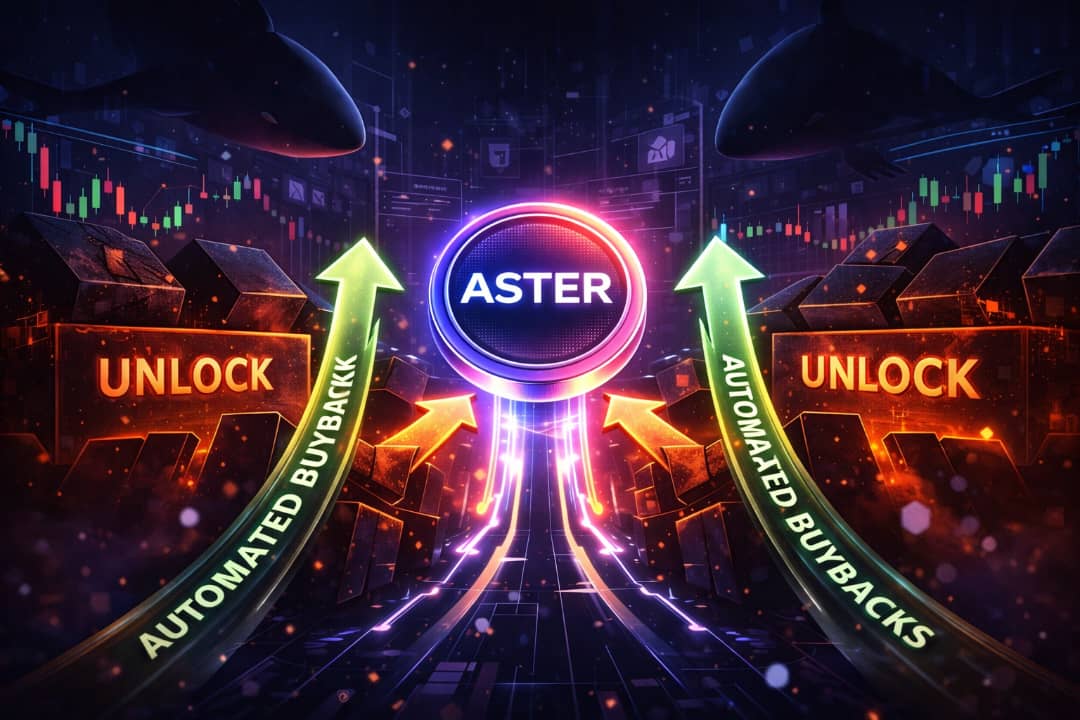
After plunging to a new low of $0.61, Aster_DEX has officially activated its Strategic Buyback Reserve, pushing automatic token repurchases live on-chain. The team confirmed the deployment publicly, saying the system is designed to stabilize supply, restore confidence, and counter accelerating market pressure, though investors remain divided on whether it will be enough.
Aster_DEX shared the update through its official channel on X, confirming that automated buybacks have already begun and are verifiable directly on-chain. The move marks the rollout of what the team describes as a dynamic, market-responsive program that allocates a substantial share of platform fees into targeted token acquisition.
But despite the activation, concerns surrounding unlock schedules, whale concentration, and deteriorating fundamentals continue to overshadow sentiment across the ecosystem.
Buyback Reserve Deploys 20–40% Of Fees Into Automated Repurchases
Aster_DEX says the buyback initiative is part of its Stage 5 Buyback Program, first announced last month. With the activation now live, the system is automatically directing 20% to 40% of daily platform fees into buybacks.
Unlike manual interventions used previously, this automated framework is designed to adjust in real time based on market conditions. When volatility rises or price declines accelerate, the buyback engine increases its purchasing intensity. When conditions stabilize, the allocation moderates.
The goal is simple:
- Reduce circulating supply
- Increase buy-side pressure
- Strengthen long-term token value
According to the team, initial buybacks have already been executed from the reserve wallet 0x5E4969C41ca9F9831468B98328A370b7AbD5a397, ensuring transparency and verifiability.
Aster_DEX emphasized that this is intended to reinforce “sustainable tokenomics and long-term holder confidence.” But traders remain cautious, pointing out that buybacks alone cannot fix structural issues.
Massive Token Unlock In February Sparks Fears Of Sell Pressure
While the buyback activation aims to support price stability, the timing clashes with one of the largest upcoming token unlocks in the ecosystem’s history. A 96 million token unlock is scheduled for February 2026, and additional unlocks will continue every quarter until 2035.
This long-term unlock schedule signals that new supply will consistently hit the market for nearly a decade. With whales already controlling a large share of the circulating supply, analysts warn that these unlocks give large holders room to sell into any temporary price recovery.
Crypto analyst commentary on X highlights that the increasing supply risks overwhelming any buyback effects, especially during bearish conditions or liquidity shortages.
What’s really happening with $ASTER? Here’s the short version, so you don’t get left behind.
A massive unlock of 96 million tokens is scheduled for February 2026, and more tokens will keep unlocking every quarter until 2035. This means there will be more supply hitting the… pic.twitter.com/qfsTIcbNek
— Mizzella (@mizzelaalphax) January 19, 2026
The concern is that while buybacks withdraw tokens gradually, unlocks inject them in massive batches, creating more selling pressure than the system can absorb.
Fundamentals Continue To Weaken As Competitors Gain Momentum
Investor confidence is also being shaken by deteriorating fundamentals within the $ASTER ecosystem. Several red flags are driving negative sentiment:
- High token concentration among whales
- Liquidity risks after delisting controversy
- Volume decline as competitors outperform
- Excessive leverage encouraging liquidation cascades
The DeFiLlama delisting incident further intensified scrutiny around transparency. Although Aster_DEX attributed the situation to misreporting and data inconsistencies, industry watchers argue that delisting from major analytics platforms severely impacts credibility.
Meanwhile, rival platform Lighter has overtaken Aster in trading volume, drawing attention from users who prioritize stability, deeper liquidity, and more resilient token economics.
Aster’s offering of 1001x leverage has also become a double-edged sword. While it attracts aggressive traders, it also increases forced liquidations during volatility, amplifying downward pressure on price.
History Repeats As $ASTER Faces Another Major Crash Scenario
This current downturn is not new for Aster. The token suffered a major collapse in October 2025, when a Phase 2 airdrop triggered a sharp sell-off:
- Token price crashed 50%
- 320 million tokens were unlocked at once
- Whales liquidated 4% of total supply
- TVL dropped by $326 million
The event revealed weaknesses in vesting design and raised concerns about supply management. Many investors feared the team lacked a cohesive long-term roadmap to control dilution or sustain ecosystem growth.
Fast forward to 2026, and the same issues appear to be resurfacing, only now they are amplified by even larger unlock schedules and competitive pressure from alternative platforms.
Even with automated buybacks running, the scale of circulating supply, whale dominance, and structural liquidity challenges creates a difficult environment for recovery.
Community Split Between Hope And Caution
The reaction across the community is mixed. Some traders see the Strategic Buyback Reserve as a positive catalyst that demonstrates the team’s willingness to intervene and protect long-term holders. They argue that consistent buybacks, if sustained for years, could gradually stabilize price and restore confidence.
However, others warn that:
- Buybacks may not outpace unlock-driven dilution
- Whale concentration remains a systemic risk
- Market trust has not yet recovered
- Fundamental competitive weaknesses persist
The biggest question is whether Aster_DEX can create enough real economic activity, fees, volume, and user growth, to support continuous buybacks over time. Without that, the program risks becoming a temporary band-aid rather than a structural solution.
Outlook: $ASTER Remains High-Risk As Market Tests Its Limits
The bottom line is clear: $ASTER is extremely risky right now. While automated buybacks offer support, the ecosystem faces major challenges that cannot be solved through repurchases alone.
Key factors to monitor in the coming months include:
- The February 2026 unlock and its impact on price
- Whale movement and concentration trends
- Competitive pressure from platforms with stronger fundamentals
- Updates following the DeFiLlama delisting
- Sustainability of buyback allocations and fee generation
As one analyst put it: “If you’re watching $ASTER, track unlocks, track whales, and track fundamentals, not hype.”
For traders who want quick, digestible updates, the original commentary ends with a simple reminder:
Keep an eye on unlocks. Watch the whales. Stay cautious.
Disclosure: This is not trading or investment advice. Always do your research before buying any cryptocurrency or investing in any services.
Follow us on Twitter @themerklehash to stay updated with the latest Crypto, NFT, AI, Cybersecurity, and Metaverse news!
