
A lot has been happening across the Ethereum ecosystem recently, and it’s not just one isolated update, it’s a mix of protocol direction, DAO decisions, infrastructure upgrades, and even some unexpected network issues.
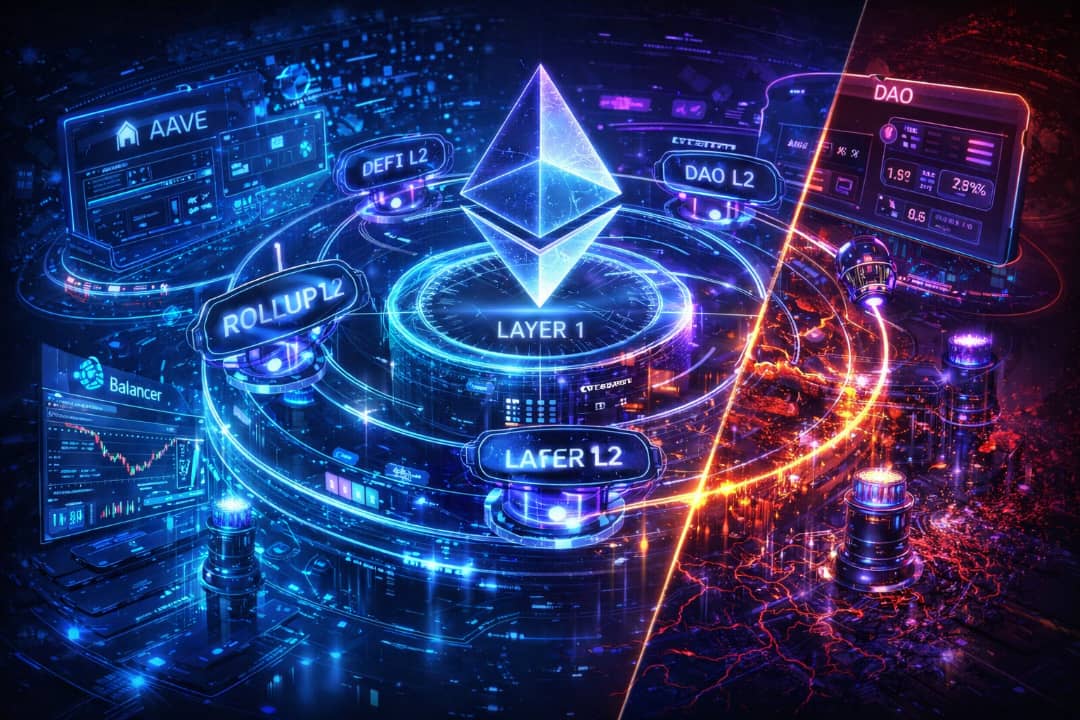
At the center of it all is a new outline from the Ethereum Foundation, which is trying to make things clearer around how Layer 1 (L1) and Layer 2 (L2) are expected to evolve going forward.
According to the Foundation, Ethereum’s L1 will continue to act as the main settlement layer and the core hub for DeFi. That part isn’t changing. What is changing, though, is how L2s are being positioned.
Instead of just scaling solutions, L2s are now expected to become more like specialized service layers, each offering something a bit different.
Ethereum Foundation Pushes For Stronger L2 Standards And Better Ecosystem Coordination
The Foundation didn’t just stop at defining roles. It also set expectations.
L2s are being advised to reach at least Stage 1 security standards and gradually move toward Stage 2. There’s also a push toward synchronous composability and something referred to as “native rollups,” which suggests tighter integration with the base layer over time.
At the same time, the Foundation says it will continue working on scaling L1 itself, alongside blobs, which, interestingly, are still only about 30% utilized right now.
Another issue being highlighted is fragmentation. With so many chains and rollups, the user experience across the ecosystem can feel scattered. The Foundation says improving cross-chain interaction is now a priority, which makes sense given how multi-chain things have become.
Defi Protocols And Daos Continue To Evolve Across The Network
While the broader vision is being discussed, actual protocol-level changes are also happening.
Aave DAO has approved an ARFC proposal to deploy Aave V4 on Ethereum. The process now moves forward to an AIP vote, which is the next step before a final launch. It’s still in progress, but it shows that major DeFi protocols are continuing to build directly on Ethereum’s base layer.
Balancer Labs is also making a big shift. The team has proposed shutting down its current structure and transitioning fully into a DAO model. That includes ending BAL emissions and routing all fees directly to the DAO treasury.
It’s a significant change, especially for a protocol that has been around for a while. Moves like this suggest that some projects are leaning more into decentralization and sustainability rather than relying on token emissions.
Ethereum Infrastructure And Scaling Solutions Continue To Expand
On the infrastructure side, there’s also quite a bit going on.
Conduit has launched G3, a new sequencer designed for high performance. It’s capable of handling up to 10,000 transactions per second with latency as low as around 10 milliseconds. That kind of speed is clearly aimed at real-time onchain applications, which is an area getting more attention lately.
Katana has also acquired IDEX’s onchain perpetuals platform, which adds another layer to the derivatives space on Ethereum.
Then there’s the upcoming Glamsterdam upgrade, which is targeting improvements in speed, scaling, and overall user experience. Details are still emerging, but it’s part of the ongoing effort to make Ethereum more efficient and easier to use.
Even smaller updates are playing a role. Privacy Pools recently patched an SDK bug and launched a key migration, which is more of a technical fix but still important for users relying on those tools.
Network Activity, Staking Trends And Technical Discussions Continue
Beyond upgrades and launches, there are also ongoing discussions and community-driven efforts shaping the ecosystem.
EthStaker has opened its 2026 staking landscape survey, which should give some insight into how validators and participants are approaching staking this year.
At the same time, Ethereum Foundation researcher Toni Wahrstätter weighed in on a more technical topic, saying that variable payload deadlines for ePBS (enshrined proposer-builder separation) may not offer much benefit and could even reduce propagation efficiency.
It’s the kind of behind-the-scenes discussion that doesn’t always get attention but still affects how the network evolves over time.
And then there’s hiring activity too, OctantApp is currently looking for a Social Media Lead, which is a small detail, but it shows that teams in the ecosystem are still building and expanding.
Market Moves, Network Issues And Large Holdings Highlight Ecosystem Activity
On the market side, there are also some notable movements.
Bitmine has added another 65,341 ETH to its holdings, bringing its total to 4,660,903 ETH. That’s a substantial amount and shows continued accumulation at a fairly large scale.
Not everything has been smooth, though. Arbitrum Sepolia recently experienced a partial outage due to a Nitro-related issue that temporarily halted block production. The good news is that the network has since been restored and is operating normally again, with no user funds affected.
Moments like that serve as a reminder that even as the ecosystem grows, there are still technical challenges that come up from time to time.
Ethereum Ecosystem Continues To Shift While Maintaining Core Foundations
Taking a step back, all of these updates point to something bigger.
Ethereum isn’t just scaling, it’s reorganizing how different parts of its ecosystem function. L1 remains the core settlement and DeFi layer, while L2s are slowly becoming more specialized and service-oriented.
At the same time, protocols are evolving, infrastructure is improving, and the community continues to experiment with new ideas.
It’s not one single change, but a collection of small shifts happening at the same time.
And while things might feel a bit scattered at times, the general direction seems clear: Ethereum is trying to grow without losing its core structure.
Disclosure: This is not trading or investment advice. Always do your research before buying any cryptocurrency or investing in any services.
Follow us on Twitter @themerklehash to stay updated with the latest Crypto, NFT, AI, Cybersecurity, and Metaverse news!
