
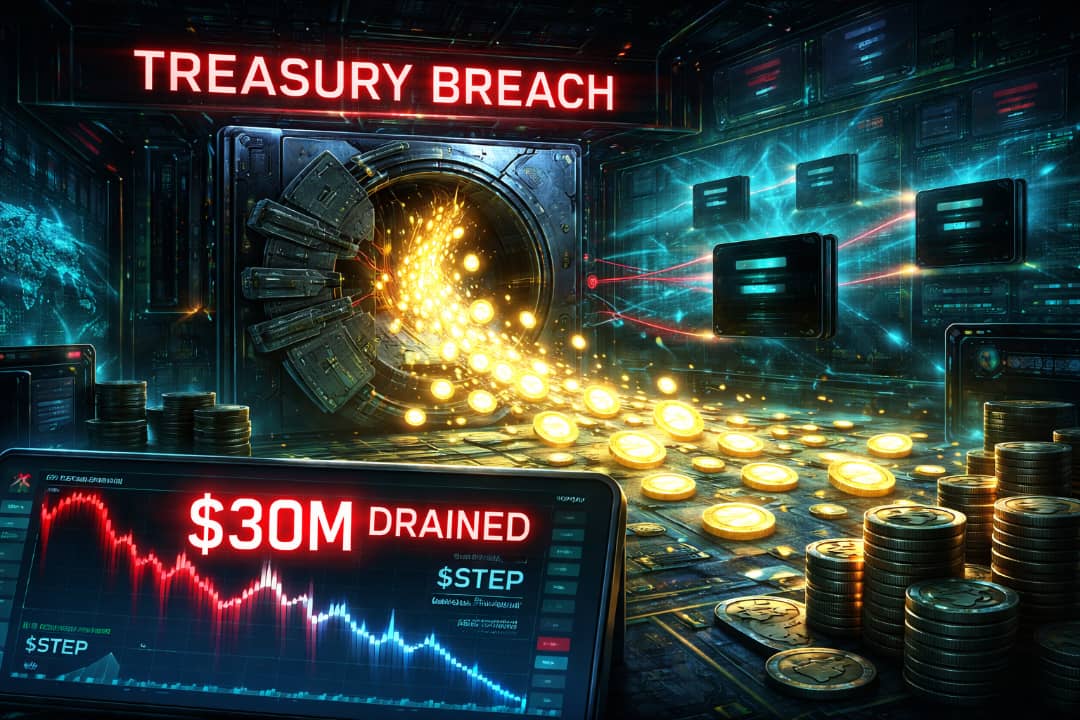
Step Finance has disclosed a significant security incident involving its protocol-owned funds, marking one of the largest Solana DeFi treasury compromises so far this year.
The Solana analytics platform confirmed that multiple treasury and fee wallets were breached, resulting in the unauthorized unstaking and transfer of 261,854 SOL, worth roughly $30 million at current market prices.
The team publicly acknowledged the exploit in a statement on X, explaining that the affected wallets were tied to protocol funds, not user deposits, and that emergency response measures were already underway.
https://Twitter.com/StepFinance_/status/2017667403803410554
Onchain data shows the stolen SOL being moved into newly created addresses shortly after the breach, a common tactic used to obscure asset trails before further distribution or liquidation.
While Step Finance stressed that customer funds remain safe, the incident has sent shockwaves across the Solana ecosystem, reigniting concerns about treasury security even among established DeFi platforms.
Over 261,000 SOL Drained In Coordinated Wallet Compromise
Blockchain investigators quickly traced the exploit to several treasury and fee-collecting wallets linked to Step Finance’s infrastructure.
According to onchain analysis shared by crypto researchers, the attacker systematically unstaked large amounts of SOL before transferring the funds across multiple fresh addresses, a process suggesting careful planning rather than a spontaneous breach.
https://Twitter.com/wiseadvicesumit/status/2017830941268607002
The total loss of 261,854 SOL places this incident among the most severe treasury attacks in recent Solana DeFi history.
What makes the breach particularly concerning is that protocol-owned funds were secured through multi-signature wallets, a security model designed to prevent single-point failures.
Yet despite these protections, attackers were still able to gain sufficient access to execute large transfers, raising difficult questions about key management, internal controls, and potential social engineering vulnerabilities.
$STEP Token Collapses Nearly 90% In A Single Day
Market reaction to the breach was immediate and brutal.
Within hours of the disclosure, the $STEP token plunged roughly 90%, wiping out a massive portion of its market value in less than 24 hours.
Liquidity thinned rapidly as traders rushed to exit positions, fearing long-term damage to the protocol’s treasury strength and investor confidence.
For many holders, the collapse underscored a recurring DeFi reality: even when user funds are technically safe, treasury breaches can still devastate token valuations because protocol finances directly influence development, incentives, and long-term sustainability.
The selloff also triggered broader volatility across smaller Solana-based tokens, as traders reassessed security risks throughout the ecosystem.
Team Moves Quickly To Contain Damage And Launch Investigation
Step Finance has stated that it is actively working with cybersecurity and blockchain forensics firms to identify how the breach occurred and whether any internal systems were compromised.
The team emphasized that:
- User wallets and assets remain unaffected
- Only protocol-owned treasury and fee funds were involved
- Emergency security measures have been implemented
- A full post-mortem investigation is underway
By moving quickly to communicate and coordinate external experts, Step Finance aims to contain further risk while tracing the stolen funds across the blockchain.
In many past DeFi exploits, rapid response has proven critical in freezing assets at centralized exchanges or flagging wallets before attackers fully cash out.
However, recovery outcomes remain uncertain, especially when funds are quickly bridged, swapped, or laundered through decentralized liquidity pools.
Third Solana DeFi Treasury Breach In January Raises Alarms
The Step Finance incident is not isolated.
It marks the third Solana DeFi treasury breach reported in January alone, signaling a troubling pattern targeting protocol-owned capital rather than individual users.
While many DeFi platforms have strengthened smart contract security over the years, treasury management has increasingly become a high-value attack surface.
Large protocol wallets often hold:
- Incentive funds
- Development reserves
- Fee revenue
- Strategic capital buffers
For hackers, these treasuries offer massive payouts in a single exploit, sometimes easier to target than hardened smart contracts.
The repeated breaches also highlight that multi-signature wallets, while helpful, are not foolproof if operational security around key holders is compromised.
Phishing, malware, insider threats, and social engineering attacks have all become common methods for bypassing multisig protections without directly exploiting smart contract code.
Growing Pressure On DeFi To Rethink Treasury Security Models
The Step Finance breach adds fresh urgency to calls for stronger treasury governance across decentralized finance.
As protocols mature and accumulate millions, sometimes billions, in reserves, traditional crypto wallet setups are increasingly proving inadequate against sophisticated attackers.
Security experts are now pushing for:
- Hardware-enforced signing environments
- Time-locked treasury withdrawals
- Real-time monitoring and anomaly detection
- Segmented treasury structures instead of single large wallets
- More decentralized signing authorities
Some platforms are also exploring onchain governance delays, where large transfers require public notice and cooldown periods before execution, giving communities time to react to suspicious activity.
Without these added layers, protocol treasuries will likely remain one of the most attractive targets in the crypto economy.
A Stark Reminder Of DeFi’s Ongoing Risk Landscape
While Step Finance’s assurance that user funds were not impacted offers some relief, the broader consequences of the breach are already being felt.
The collapse of the $STEP token, the loss of tens of millions in protocol capital, and the erosion of trust highlight how treasury security is now just as critical as smart contract audits.
As Solana continues to grow as a DeFi hub, the concentration of high-value treasuries will only attract more sophisticated attacks.
The events of January are shaping up to be a turning point, forcing protocols to rethink how decentralized finance protects its own balance sheets.
For now, Step Finance joins a growing list of projects learning a hard lesson: in DeFi, security failures don’t need to touch user wallets to cause massive damage.
Sometimes, all it takes is a compromised treasury to shake an entire ecosystem.
Disclosure: This is not trading or investment advice. Always do your research before buying any cryptocurrency or investing in any services.
Follow us on Twitter @themerklehash to stay updated with the latest Crypto, NFT, AI, Cybersecurity, and Metaverse news!
