
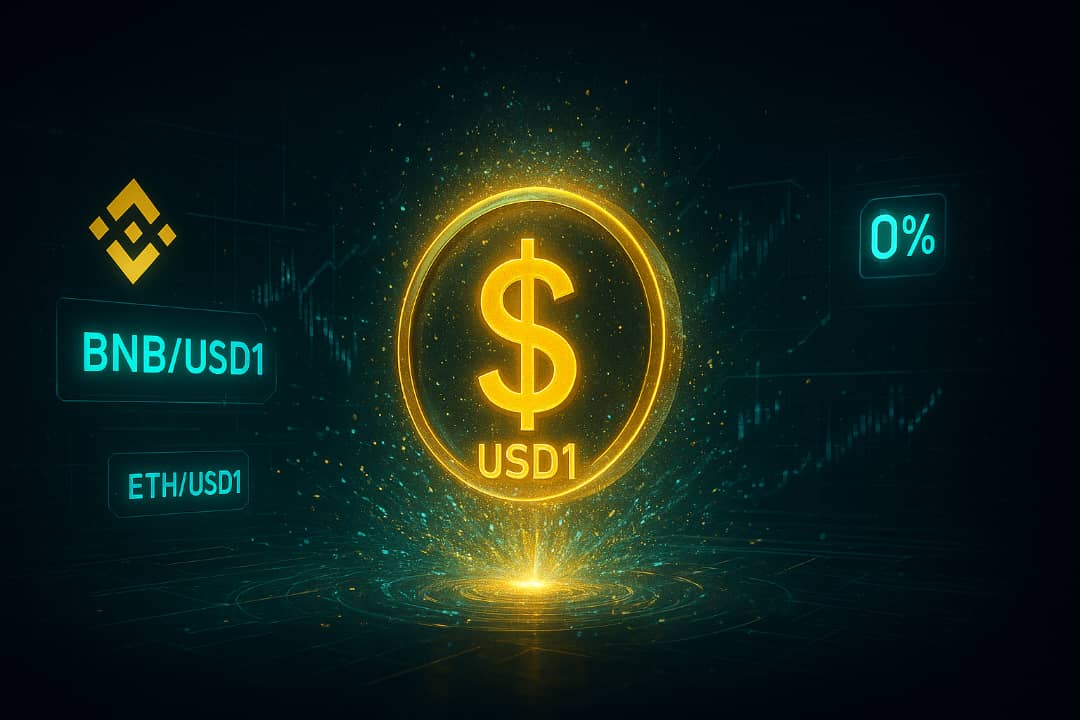
Binance is expanding its stablecoin strategy again. The exchange has confirmed it will launch new USD1 trading pairs and convert all Binance-Peg BUSD collateral into USD1.
The move marks one of the largest stablecoin migrations on the platform since Binance shifted away from BUSD earlier this year.
The announcement arrives as the exchange continues tightening its stablecoin infrastructure and boosting USD1’s presence across spot markets. The update was first shared publicly through industry channels and later amplified by major market watchers, including this post from World Liberty Financial:
🦅☝️MAJOR WLFI MOMENT☝️🦅
Massive expansion of USD1 utility on @binance
✅ New Spot Pairs Available: BNB/USD1, ETH/USD1, and SOL/USD1
✅ Zero Fees for All Users: 0% fees on USD1/USDT and USD1/USDC
✅ Zero Fees for VIP2-9: 0% fees on BNB/USD1, BTC/USD1, ETH/USD1, and SOL/USD1…— WLFI (@worldlibertyfi) December 10, 2025
New USD1 Trading Pairs Go Live December 11
Binance is adding fresh spot trading pairs for the exchange’s biggest assets. The new markets , BNB/USD1, ETH/USD1, and SOL/USD1, will open for trading at 16:00 (UTC+8) on December 11, 2025.
The exchange is also enabling trading bot services, including spot algorithmic order tools, for these pairs at launch. That makes USD1 one of the fastest-expanding stablecoins in terms of supported automated trading functionality.
The choice of assets is not random. BNB, ETH, and SOL remain among the most actively traded on Binance, and attaching USD1 pairs to them increases liquidity routing while creating deeper stable-based markets for high-volume traders. The exchange has already done similar rollouts for other major assets, but the USD1 expansion reflects a clear strategic push.
Zero-Fee Trading Widens USD1 Adoption
Alongside the new pairs, Binance is rolling out an aggressive zero-fee structure designed to push USD1 deeper into daily trading flows. The platform confirmed the following fee policies:
- 0% fees for all users on USD1/USDT and USD1/USDC
- 0% fees for VIP2-VIP9 users on BNB/USD1, BTC/USD1, ETH/USD1, and SOL/USD1
This creates a cost advantage for traders choosing USD1 over other stablecoins. For retail users, fee-free conversion between USD1 and leading stables removes friction. For higher-tier traders, zero-fee access to major crypto/USD1 markets boosts arbitrage potential and deepens professional liquidity.
Binance has historically used zero-fee incentives as a mechanism to strengthen liquidity in early-stage or priority markets. The same strategy accelerated its dominance in BTC/USDT trading and later BTC/TUSD markets. Now the exchange appears to be repeating the model with USD1.
Binance-Peg BUSD Collateral Will Convert to USD1
The most consequential update is the full conversion of Binance-Peg BUSD collateral assets into USD1.
Binance states the conversion will occur automatically at a 1:1 ratio. The process will be completed within one week of the announcement. Afterward, users will be able to track all conversion details through the B-Token Proof of Collateral page by searching for “BUSD.”
This move effectively winds down the last major internal component of the BUSD system still operating on Binance. Since Paxos halted BUSD issuance, the exchange has gradually phased out the product across trading, lending, and collateral ecosystems. Converting collateral removes a key backend dependency and makes USD1 the default settlement asset in several internal systems.
For users, nothing changes functionally in terms of balances or access. But for the exchange’s risk and liquidity teams, the consolidation simplifies collateral management and aligns Binance with its long-term stablecoin strategy.
USD1 Solidifies Its Position on the Exchange
The cumulative effect is clear: USD1 is now a core infrastructure asset on Binance.
Between new trading pairs, zero-fee incentives, and the backend migration from BUSD to USD1, Binance is building a stablecoin framework that centers on USD1 instead of third-party alternatives.
This also aligns with global regulatory shifts. Many jurisdictions now expect exchanges to maintain clearer backing structures, real-time collateral visibility, and consistent reporting. Centralizing around USD1, an asset for which Binance can design standardized transparency flows, gives the platform greater operational control.
Market analysts expect the shift to strengthen USD1’s usage across derivatives, liquidity pools, and automated trading systems in the coming months. With BUSD off the table, USD1 now becomes the anchor for future stablecoin-related expansions on the platform.
What This Means for Binance Users and the Market
For traders, the advantages are immediate. More pairs. More liquidity. Zero-fee routing. And deeper interoperability with algorithmic trading tools.
For institutional desks, USD1’s standardized framework reduces risk and increases transparency around collateral mechanics.
For the broader market, this shift signals the end of BUSD’s era and the rise of USD1 as the new central stablecoin on the world’s largest exchange. Binance has spent most of 2025 restructuring its asset operations, and this update shows the direction is now firmly set.
With USD1 positioned at the center of Binance’s infrastructure, and the last BUSD components being sunset, the exchange is creating a more streamlined stablecoin ecosystem. The expansion of trading pairs and collateral support makes the transition smoother and prepares Binance for a new phase of stablecoin-driven liquidity.
As adoption grows and fee-free trading accelerates inflows, USD1 is likely to become one of the most used stablecoins across spot and algorithmic markets. Binance’s latest update confirms the exchange is backing USD1 as the foundation of its next-generation trading environment.
Disclosure: This is not trading or investment advice. Always do your research before buying any cryptocurrency or investing in any services.
Follow us on Twitter @themerklehash to stay updated with the latest Crypto, NFT, AI, Cybersecurity, and Metaverse news!
