
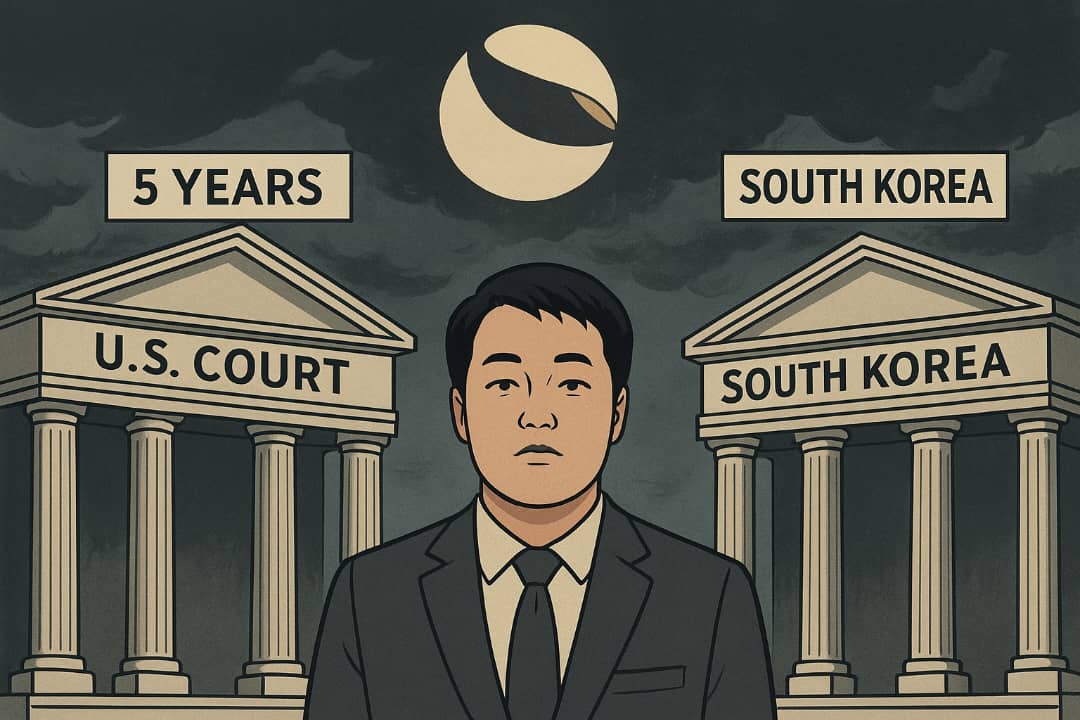
Terraform Labs co-founder Do Kwon is asking a U.S. court to cap his prison sentence at five years, marking the latest turn in the ongoing fallout from the 2022 collapse of the Terra ecosystem.
The request comes as prosecutors in South Korea push for a dramatically harsher outcome, up to 40 years behind bars.
The filing, submitted on November 27 and first reported by Bloomberg, sets up a critical moment in one of crypto’s most consequential legal battles. Two years after TerraUSD’s implosion erased $40 billion in value and triggered one of crypto’s worst market cascades, the man at the center of the storm is now fighting over how much punishment is enough.
Kwon pleaded guilty in August to conspiracy and wire fraud. https://t.co/FMalrAMJHs
— Bloomberg (@business) November 27, 2025
A Bid for Leniency After Pleading Guilty
Kwon pleaded guilty in August 2024 to two federal charges, including conspiracy to defraud, avoiding what would have been a high-profile U.S. trial. His legal team now argues that a sentence beyond five years would be “far greater than necessary,” given what he has already endured and the penalties he has accepted.
In the filing, attorneys say Kwon has already spent nearly three years in detention, including long stretches in what they describe as harsh prison conditions in Montenegro.
Kwon was arrested there in 2023 for attempting to travel with a forged passport, before being extradited to the United States in mid-2024.
They also highlight the significant personal cost he has incurred since the collapse of TerraUSD:
- The forfeiture of more than $19 million
- The loss of multiple properties
- Ongoing financial penalties related to the plea deal
His lawyers argue these consequences should factor into sentencing, claiming he has already paid “a substantial personal and financial price.”
U.S. Prosecutors Already Agreed to a 12-Year Cap
Under Kwon’s plea agreement, U.S. prosecutors agreed not to seek more than 12 years in prison. But his defense insists five years is enough to satisfy justice while acknowledging the harm caused by the collapse.
The argument centers on proportional punishment. Kwon’s team says a five-year term reflects accountability but avoids what they describe as an excessive response fueled by public anger over Terra’s downfall.
Whether the court accepts that reasoning remains unclear. Judges in large-scale financial fraud cases often weigh the scope of the losses heavily, and Terra’s collapse remains one of the most devastating failures in crypto history.
The Shadow of a 40-Year Sentence in South Korea
Regardless of what the U.S. decides, Kwon’s legal troubles are far from over.
Prosecutors in South Korea continue pursuing a separate case tied to the same events. Their recommended sentence: up to 40 years. That number reflects both the scale of investor losses and the country’s view that the fraud originated on Korean soil.
South Korean officials have made clear they intend to bring Kwon back home, arguing their case is broader and rooted in local regulations. The competing sentences create a rare jurisdictional standoff, one that could influence where Kwon actually serves time once the U.S. proceedings conclude.
Legal experts say South Korea is unlikely to drop its case even if the U.S. imposes a lengthy sentence. With many victims based in Korea, prosecutors there view domestic accountability as essential.
Do Kwon Says 5-Year US Sentence Is Enough as South Korea Seeks 40 Years.
Terraform Labs founder Do Kwon is asking a U.S. judge to limit his prison sentence to five years.
Meanwhile, in South Korea, prosecutors are seeking up to 40 years in prison for him over the 2022 collapse… pic.twitter.com/a9ddYqAS6d
— TheCryptoBasic (@thecryptobasic) November 27, 2025
A Collapse That Reshaped Global Crypto Policy
The TerraUSD disaster remains one of the most defining events in the history of digital assets.
In May 2022, the algorithmic stablecoin, designed to maintain a $1 peg through a complex mechanism with its sister token, LUNA, entered a death spiral. Within days, its value collapsed, wiping out billions and triggering a chain reaction that toppled entire firms across the industry.
The fallout helped accelerate stablecoin regulation in the U.S., Europe, and Asia, and brought unprecedented scrutiny to algorithmic stablecoin models. For many policymakers, TerraUSD became the clearest example of systemic risk in unregulated digital finance.
Kwon, once a celebrated figure in the crypto world, became the face of accountability for that collapse. His disappearance, flight, and eventual arrest only intensified global attention on the case.
Defense Strategy: Emphasizing Time Served and Cooperation
Kwon’s legal strategy in the U.S. centers on cooperation, remorse, and the argument that additional punishment beyond five years is disproportionate.
Key elements of his defense include:
- Time already spent in custody, including months in Montenegro
- Acceptance of guilt through the plea agreement
- Financial penalties already paid, including multimillion-dollar forfeitures
- Willingness to face remaining charges, including those in South Korea
His lawyers say the combination of those factors demonstrates sufficient accountability and reduces the need for a harsher sentence.
The court will also weigh the plea deal itself, which typically signals an agreement between prosecutors and the defense that a moderate sentence is appropriate.
A Sentencing Decision With Global Consequences
The U.S. judge’s decision will set the tone for what happens next, both for Kwon personally and for regulators still wrestling with the implications of Terra’s collapse.
If the court sides with Kwon and imposes a five-year sentence, it will mark one of the lighter outcomes for a financial collapse of this scale. If it leans closer to the 12-year cap, it will be seen as a strong stance against crypto-related fraud.
But either way, the looming 40-year request in South Korea means Kwon’s legal journey is still far from over.
The sentencing outcome may also influence how future cross-border crypto cases are handled, especially those involving billions in losses and overlapping jurisdictions.
Two years later, the TerraUSD collapse remains a turning point for global crypto markets. It reshaped regulatory priorities, changed investor expectations, and forced lawmakers to consider how digital assets operate across borders.
Now, Do Kwon’s sentencing, both in the U.S. and potentially later in South Korea, stands to shape the next chapter. The world is watching closely, not just to see how one case ends, but to understand how international courts will treat major failures in the digital asset ecosystem.
Disclosure: This is not trading or investment advice. Always do your research before buying any cryptocurrency or investing in any services.
Follow us on Twitter @themerklehash to stay updated with the latest Crypto, NFT, AI, Cybersecurity, and Metaverse news!
